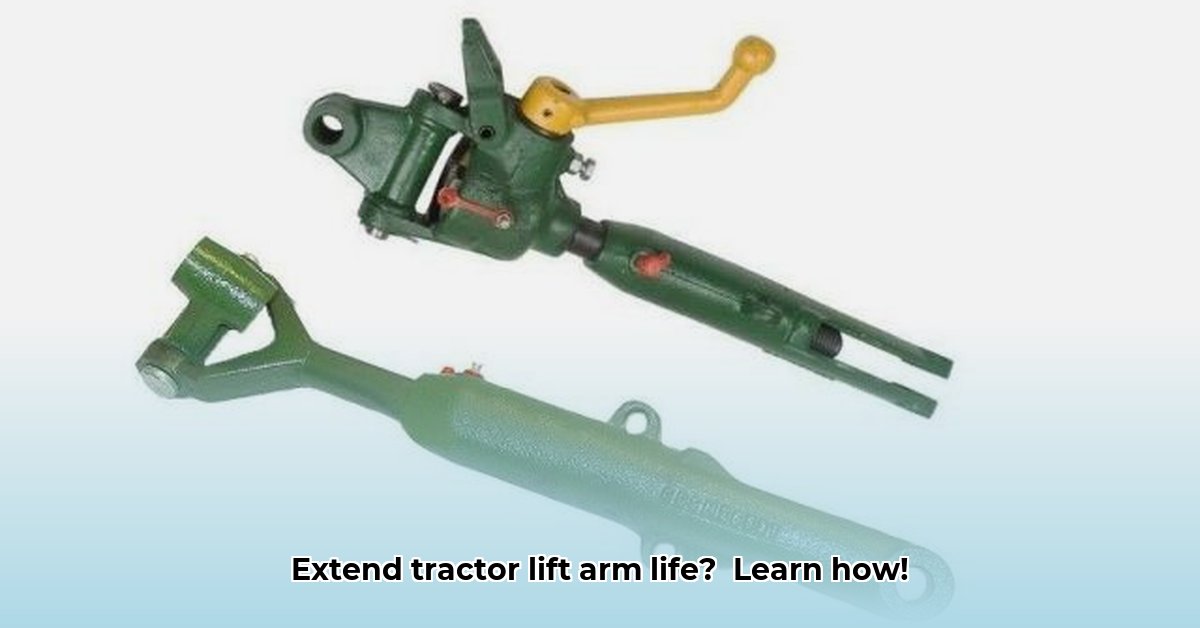
Understanding Your Tractor's Lift Arms: The Foundation of Efficient Farming
Tractor lift arms are the unsung heroes of efficient and sustainable agriculture. These crucial components connect your tractor to implements, impacting both productivity and environmental impact. Their longevity directly affects your bottom line and your farm's sustainability. This guide provides practical steps to maintain and extend their lifespan. For additional lift arm support information, check out this helpful resource.
Types of Lift Arms and Their Materials: A Comparative Analysis
Several lift arm types and materials cater to diverse farming needs and sustainability goals. The choice depends on workload, budget, and environmental commitment.
| Material | Advantages | Disadvantages | Sustainability Considerations |
|---|---|---|---|
| High-Strength Steel | Durable, strong, readily available, relatively inexpensive | Heavier, susceptible to rust (requires consistent maintenance) | Recycled steel is widely available; prioritize end-of-life recycling programs. |
| Composite Materials | Lighter weight, potentially higher strength-to-weight ratio, corrosion resistant | Can be more expensive, potential limitations in extreme stress applications | Select composites with high recycled content or bio-based components where possible. |
High-strength steel provides proven durability for heavy tasks, while lightweight composites improve fuel efficiency. However, composites may not always withstand extreme stress. The optimal choice depends on individual needs. Do you prioritize durability or fuel efficiency?
Maintaining Your Lift Arms: A Step-by-Step Guide to Extended Lifespan
Regular maintenance is crucial for safety and efficiency. Here's a routine to integrate into your farm schedule:
- Daily Visual Inspection: Inspect lift arms for cracks, bends, or excessive wear before and after each use. Early detection prevents major issues. (Note: a simple checklist on your phone can be a useful aide)
- Weekly Lubrication: Apply manufacturer-recommended grease to all pivot points and moving parts to reduce friction and extend arm life. (Check manufacturer's recommendations for the type and amount of grease)
- Monthly Pin and Bolt Check: Inspect pins and bolts for wear and looseness. Replace worn pins immediately, and tighten loose bolts to the correct torque specification. (Always refer to your tractor's manual for the precise torque specifications)
- As-Needed Cleaning: Remove mud, dirt, and corrosive materials regularly using appropriate methods to avoid damage. (High-pressure washing is effective but use caution to avoid damaging seals and moving parts)
Consistent adherence to this plan increases the likelihood of avoiding unexpected repairs. How much downtime have you experienced due to lift arm failures in the past year?
Extending Lift Arm Lifespan Through Smart Practices
Consider your lift arms valuable tools requiring careful handling:
- Avoid Overloading: Never exceed the rated weight capacity. Overloading creates undue stress leading to premature failure. (Always check the manufacturer's specifications for the maximum weight capacity of your lift arms)
- Proper Storage and Protection: Store your tractor in a sheltered location, protecting lift arms from the elements. A tarp offers additional protection. (Consider investing in a high-quality tarp to offer optimal protection from the elements)
- Scheduled Maintenance: Maintain a maintenance schedule to track inspections and preventative care. This proactive approach minimizes unexpected problems and associated costs. How much could a proactive maintenance schedule save you annually?
A well-maintained lift arm is an efficient lift arm; this impacts your overall farm productivity.
Sustainable Material Choices: Minimizing Environmental Impact
Sustainable practices encompass the entire equipment lifecycle.
- Recycled Materials: Prioritize recycled materials when replacing lift arms. This reduces the demand for new resources. (Contact your equipment supplier to inquire about the availability of lift arms made from recycled materials)
- Reduced Material Use: Choose lift arms designed for optimum strength with minimal material. Innovations in materials science are constantly improving designs in this area. (Research lift arm manufacturers who are leaders in sustainable manufacturing practices)
How can you lessen your farm's overall carbon footprint through sustainable material choices?
Future Trends in Lift Arm Technology: Embracing Innovation
Technological advances are reshaping agricultural equipment:
- Advanced Materials: Expect stronger, lighter, and more corrosion-resistant materials in the coming years. Bio-based and recycled materials are showing promise. (Stay informed about innovative materials through industry publications and trade shows)
- Smart Sensors: Real-time monitoring of lift arm condition through integrated sensors may become commonplace, predicting issues before major damage. (Incorporate smart farming technologies into your long-term planning)
What technological advancements are you most excited about for future farming efficiency?
Conclusion: Investing in Longevity, Sustainability, and Profitability
Proper lift arm care is not simply about avoiding costly repairs. It is about ensuring operational efficiency, safeguarding your investment, and embracing environmentally responsible practices. Consistent maintenance, careful operation, and informed material choices contribute to a more sustainable and profitable farm. Your investment today yields rewards for years to come.
Resources
- American Society of Agricultural and Biological Engineers (ASABE)
- Your Tractor Manufacturer's Website (Replace with relevant manufacturer)
- Local Agricultural Equipment Suppliers (Replace with relevant local suppliers)